FAQs – Frequently asked questions about metal racks with stacker pillars
When should racks with stacker pillars be used in a production line?
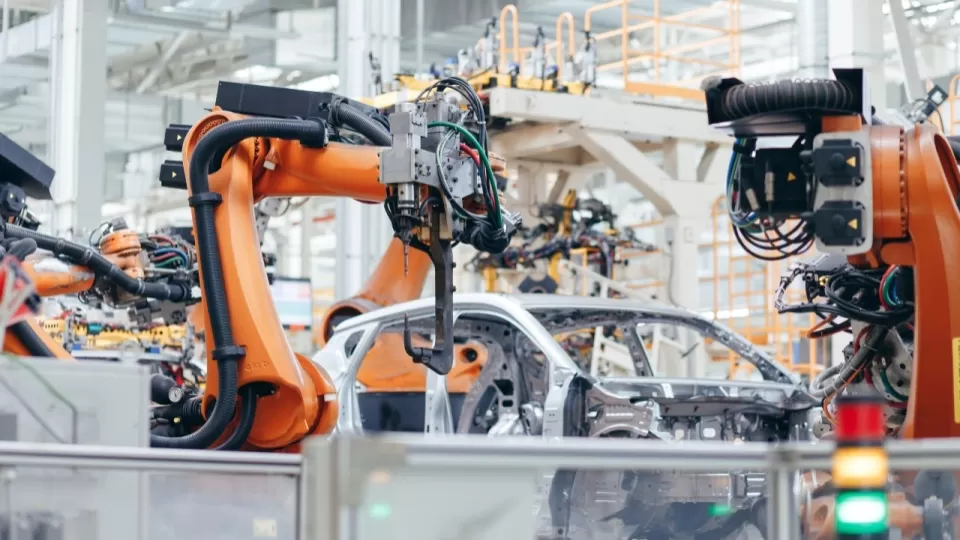
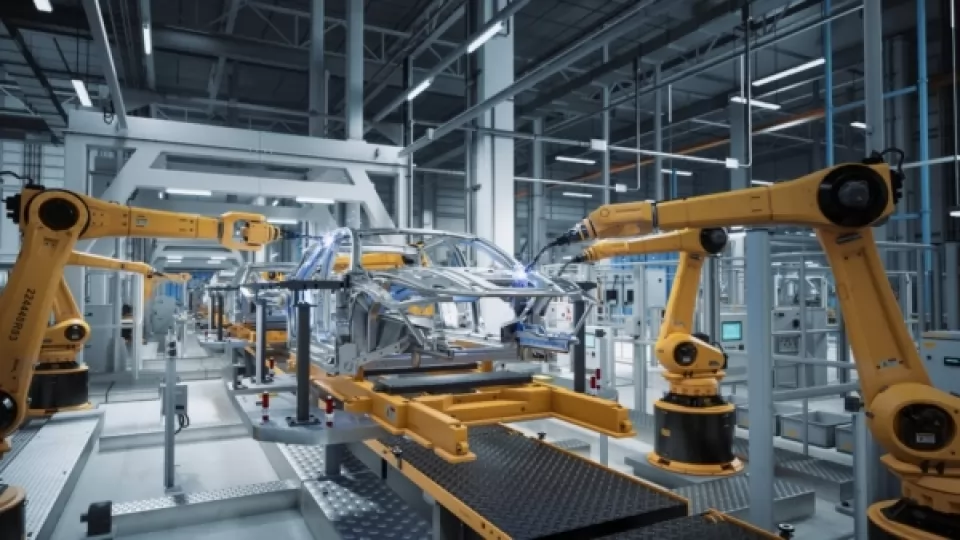
The use of stacker pillar racks is particularly recommended when the production process involves robotic loading and unloading automotive systems. In these environments, it is essential to ensure precise and repeatable component positioning, eliminating any variation that could compromise the automated cycle. They are also the ideal solution for components with complex geometries, delicate surfaces or large dimensions, where stability during handling is crucial to maintaining product quality and operational continuity.
Can metal racks with stacker pillars be customised for specific components?
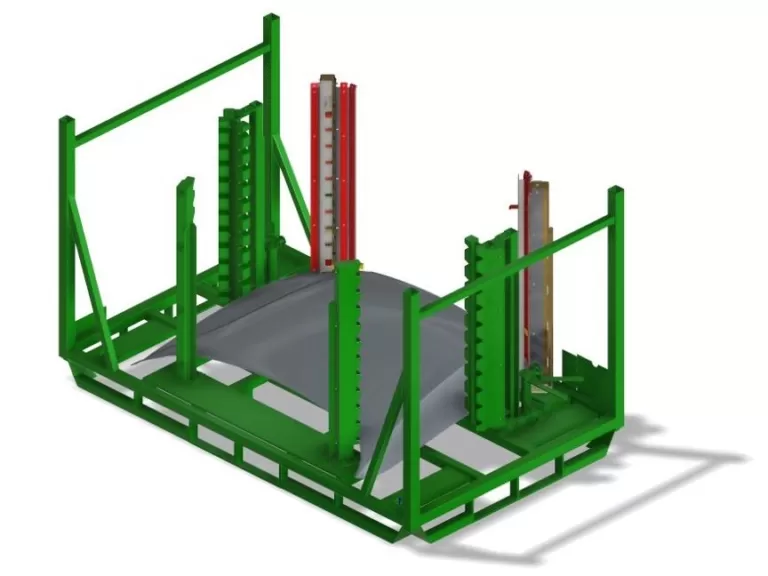
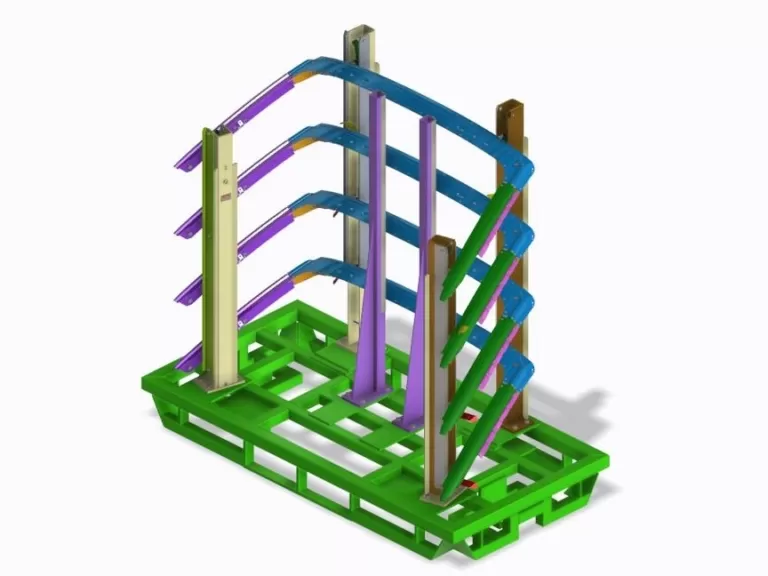
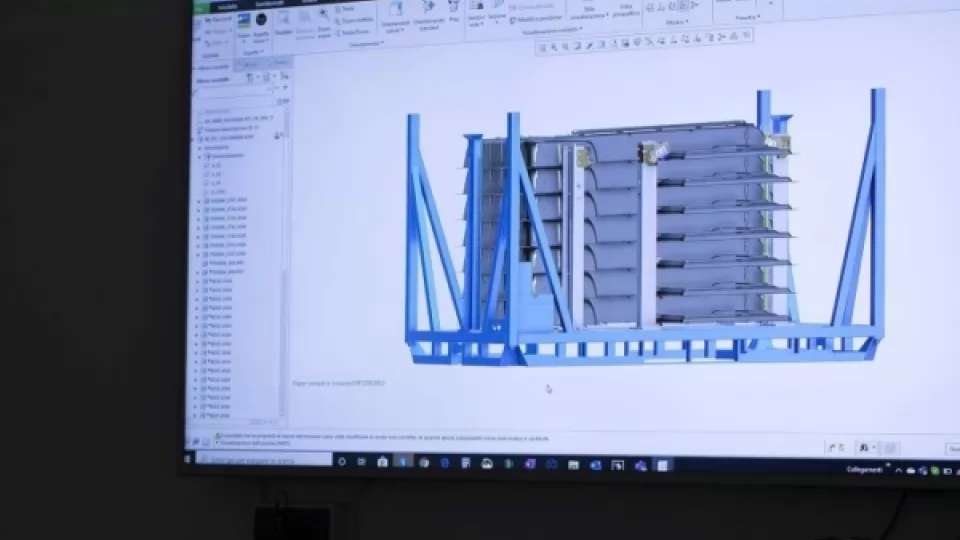
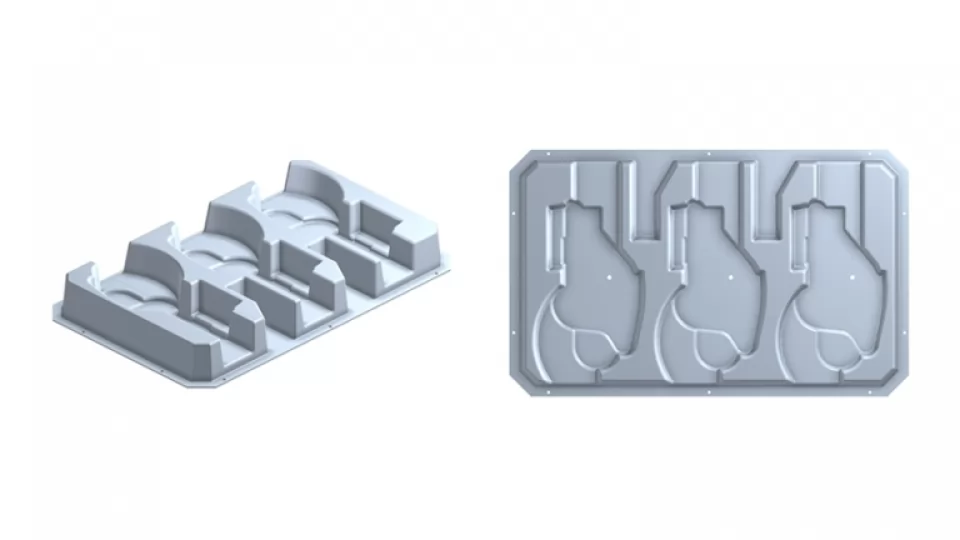
Yes, racks with stacker pillars are designed and manufactured according to the technical specifications of the component and the requirements of the production line. The internal configuration, including the stacker pillars, movable tilting supports and contact points, is developed to perfectly match the geometry of the part, ensuring support at the correct locations and protection throughout every operational stage. This approach delivers a solution that is fully integrated into the process, improving both efficiency and the reliability of the automated system.
What is the difference between a standard rack and a stacker pillar rack?
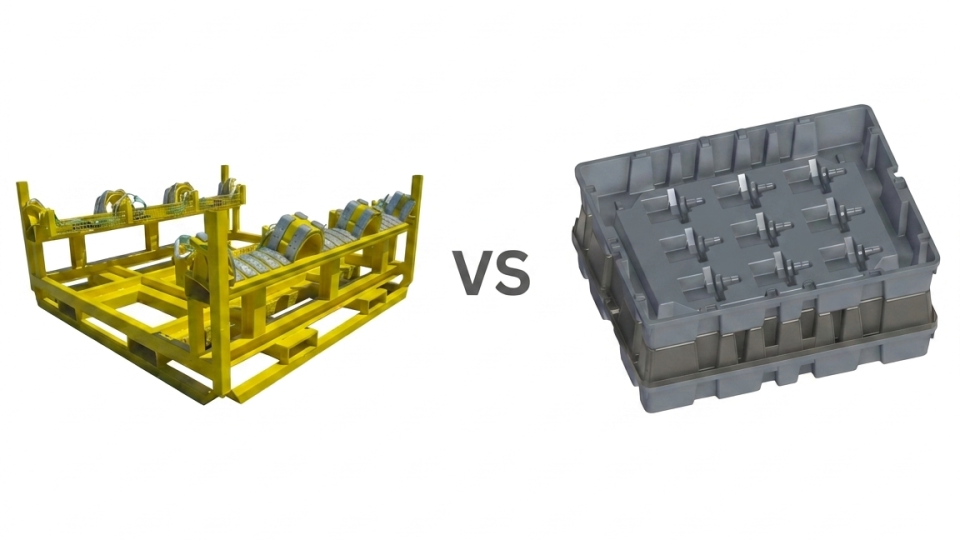
The main difference lies in their role within the production process. A standard dedicated metal rack is primarily designed for storage and transport. By contrast, a stacker pillar rack is conceived as an active part of the automated system. In addition to containing the component, it defines its position, orientation and stability, making precise, repeatable and safe robotic loading and unloading operations possible.
Are metal racks with stacker pillars suitable for high-volume production lines?
Yes, they are particularly well suited to high-volume production environments, where maintaining consistent production rates and minimising interruptions are essential. Thanks to their ability to stabilise component positioning and support automated line-side loading processes, they help reduce errors, micro-stoppages and corrective interventions. This contributes to shorter cycle times and greater overall efficiency across the automated assembly line.
How do stacker pillar racks contribute to final product quality?
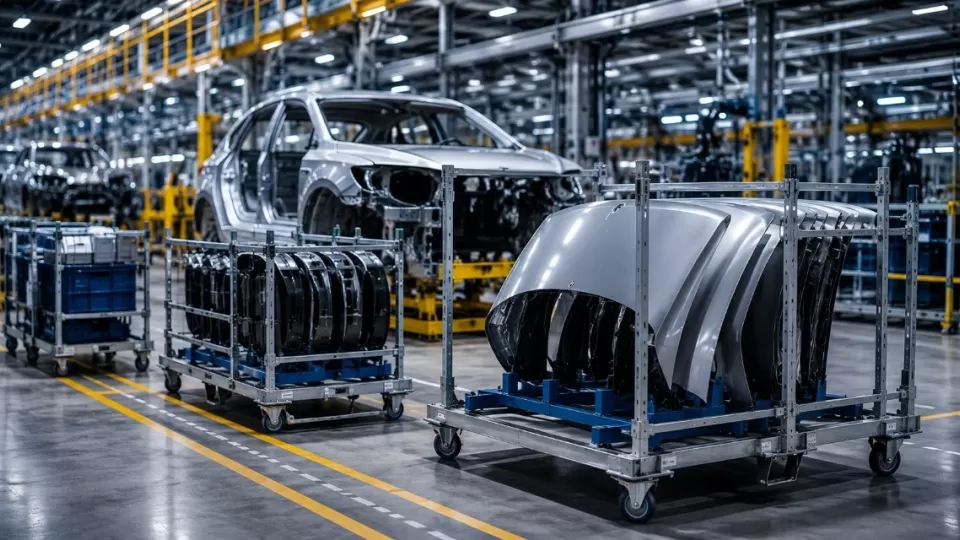
Stacker pillar racks play an important role in preserving component integrity throughout the entire logistics and production cycle. Their internal structure prevents unwanted movement and contact between parts, reducing the risk of impacts, scratches and deformation. This leads to lower scrap rates and fewer rework operations, helping manufacturers maintain high quality standards and improve the reliability of the final product.
Looking to optimise robotic loading and unloading in your production line? Contact us to develop bespoke metal racks with stacker pillars, engineered around the specifications of your components and seamlessly integrated into your automated systems.