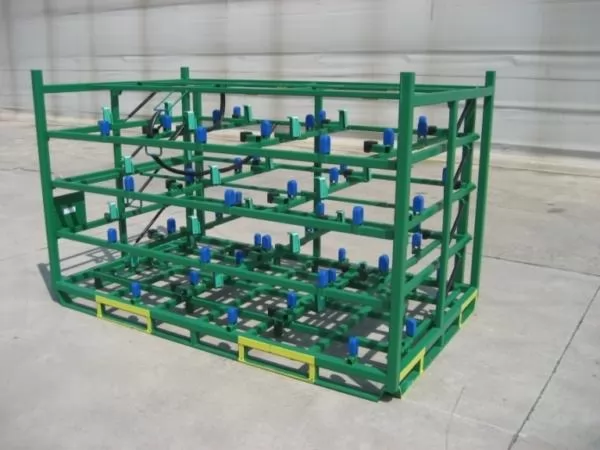
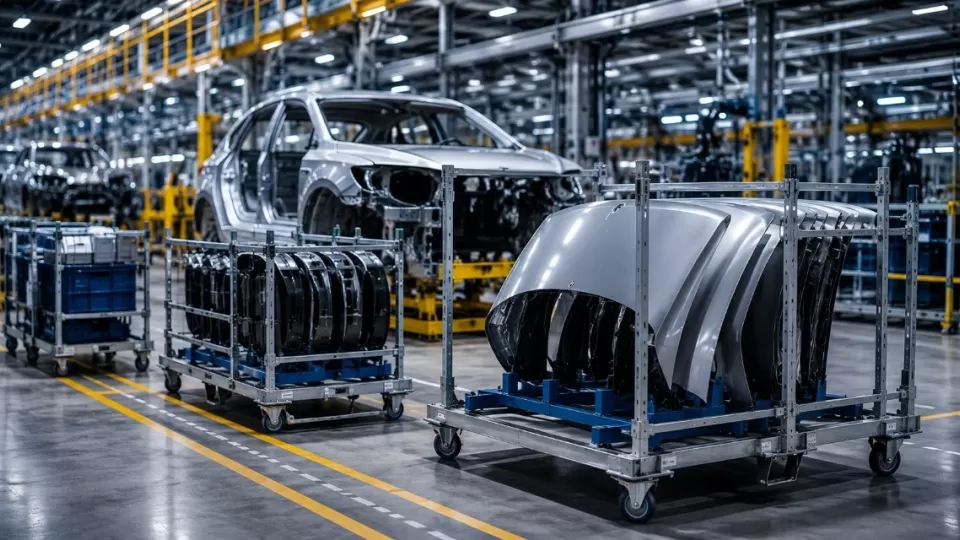
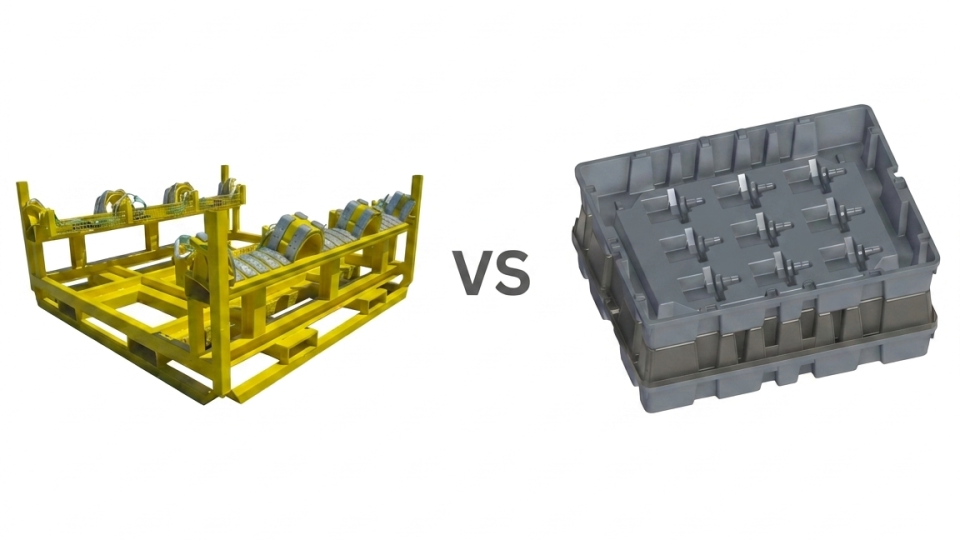
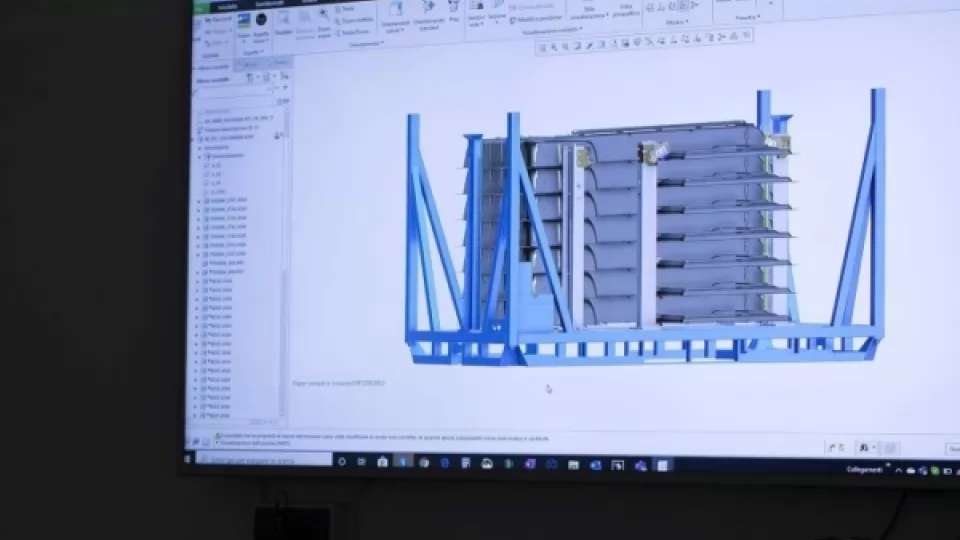
The use of the 3D model in the design of specific automotive racks offers numerous advantages. This technology makes it possible to visualize the rack in a detailed and realistic way before actual production. Starting from the 3D model of the components provided by clients, thanks to the use of CAD systems, it is possible to customize the design based on specific requirements and perform feasibility analyses and virtual simulations to optimize the maximum number of parts to be contained, handled, or transported inside the racks, while at the same time ensuring both aesthetic and functional quality.
Furthermore, the 3D model facilitates collaboration among the various stakeholders involved in the process, enabling real-time sharing and feedback.
It is important to emphasize that designing automotive racks requires a deep understanding of the typical requirements of the automotive industry. Racks must be designed by considering the dimensions, shape, and characteristics of the automotive components to be transported. It is also essential to consider ergonomic and functional aspects, ensuring that the rack is easy to handle, safe, and practical to use.
To achieve the best results in the design phase, it is essential to involve the relevant departments from the early stages of the process, such as product engineering, logistics, and production. Collaboration between the client and the manufacturer is equally important to ensure that the racks are designed taking into account specific production requirements. Finally, it is important to carry out continuous testing and improvements to optimize the design and ensure compliance with precise production standards.
In the design of automotive metal racks, particular attention must also be paid to the choice of materials. In general, lightweight but resistant materials are preferred, as they provide protection for components during transport and storage.